
Building the Valley: 5 Surprising Realities of the Phoenix Carpentry Scene
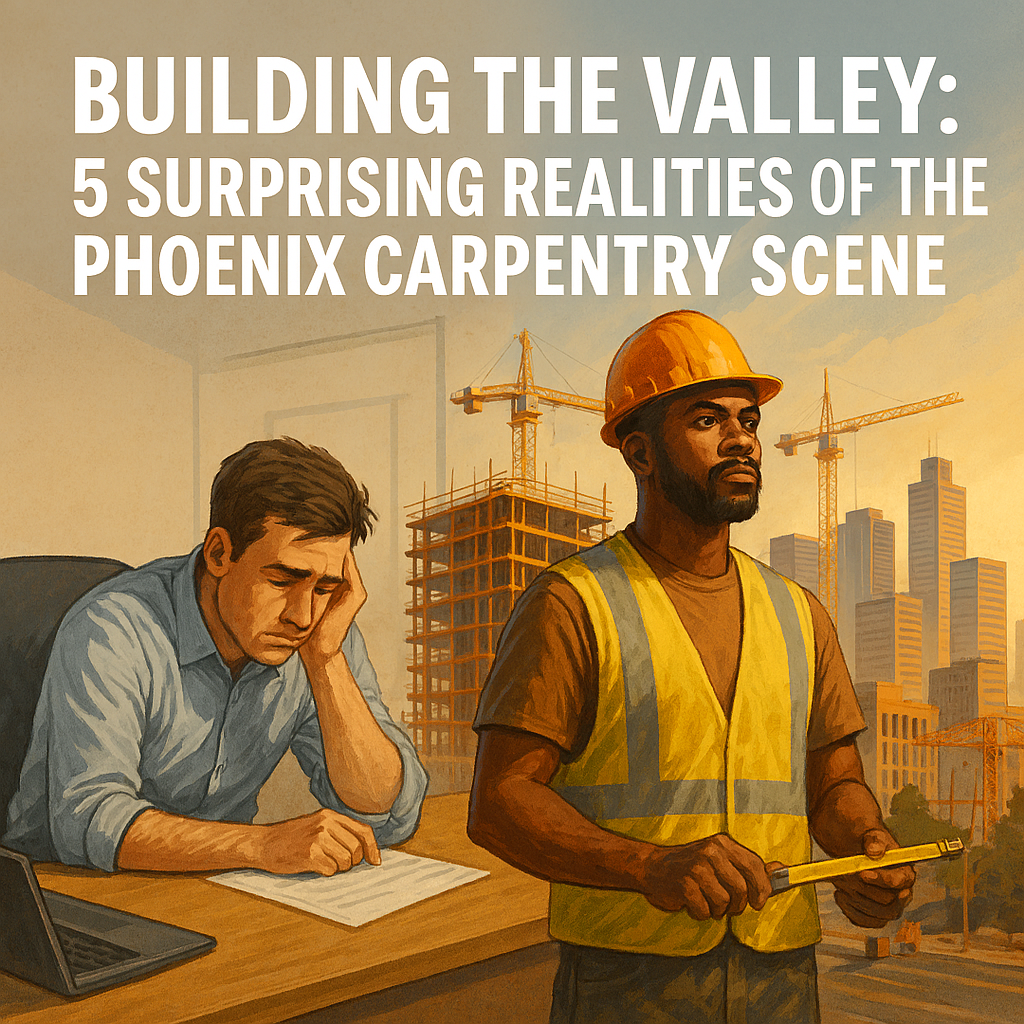
1. The Arizona Construction Boom: From Desk Fatigue to the Skyline
If you feel the "grind" of a dead-end desk job or the weight of a degree that isn't paying off, you aren't alone. I see it every day: talented people stuck in neutral while the Phoenix skyline literally transforms before their eyes. Arizona is currently in the middle of a massive construction surge, but there is a major problem—a critical shortage of skilled hands.
This bottleneck is your opportunity. In my years as a career consultant, I’ve found that carpentry has emerged as the premier "pivot" for those seeking stability and high demand in the local economy. The most surprising part? The path to becoming a craftsman in the Valley is more accessible and significantly faster than the traditional four-year route.
2. The "Free" Education Revolution
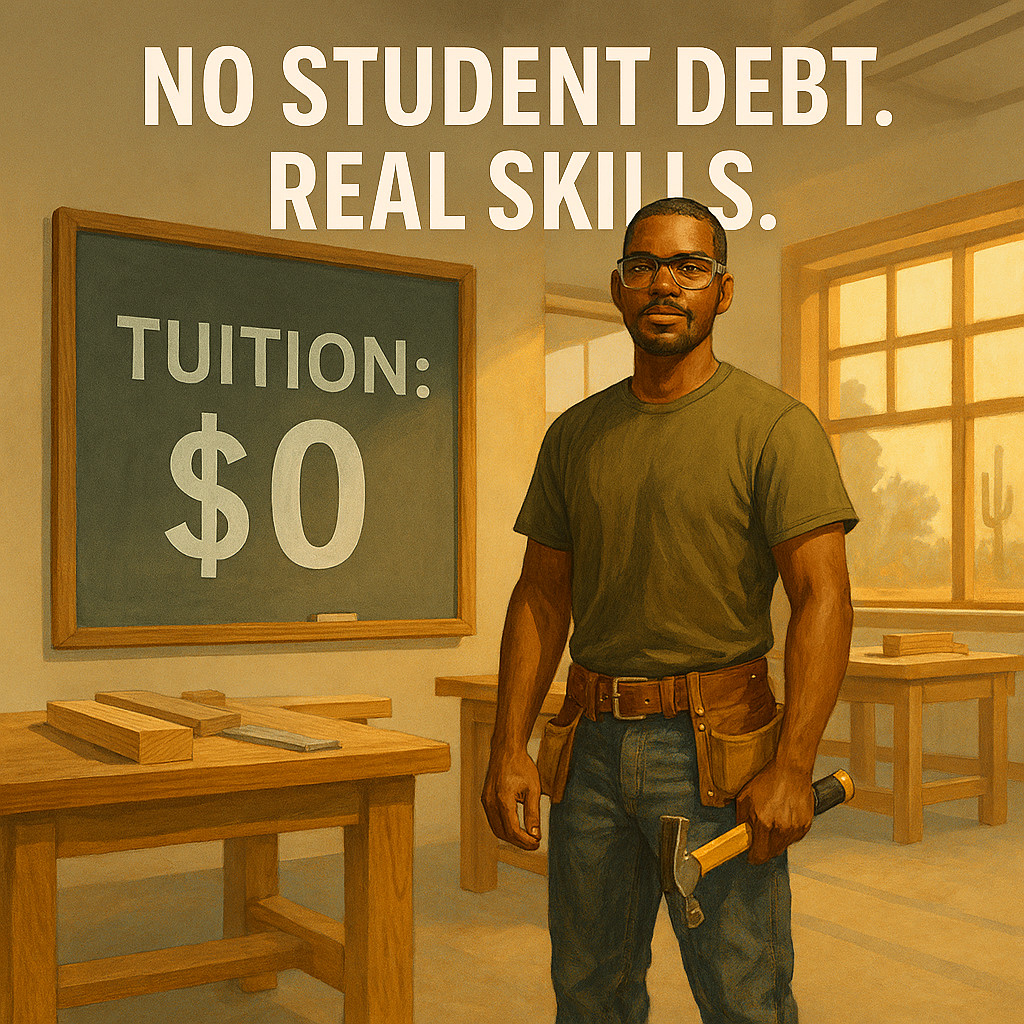
In Phoenix, tuition-free carpentry programs are removing the financial barrier and replacing it with real, employer-driven training.
The biggest shift I’ve seen in the trades landscape is the removal of the financial gatekeeper. Traditionally, trade school tuition ranges from $5,000 to over $25,000. In Phoenix, however, organizations like BuildStrong Academy (which is powered by the Home Builders Institute, or HBI) and the Home Building Academy have flipped the script by offering 100% tuition-free training.
For Veterans and those looking for a fresh start, these programs are a game-changer. They don't just provide technical skills; they provide a comprehensive support system including career coaching and "soft skills" training—focusing on the communication and reliability that Phoenix builders crave.
"BuildStrong Academy’s mission is to strengthen the local workforce by equipping students with the knowledge, confidence, and certifications required to secure stable, well-paying jobs."
3. The 9-Week Career Pivot
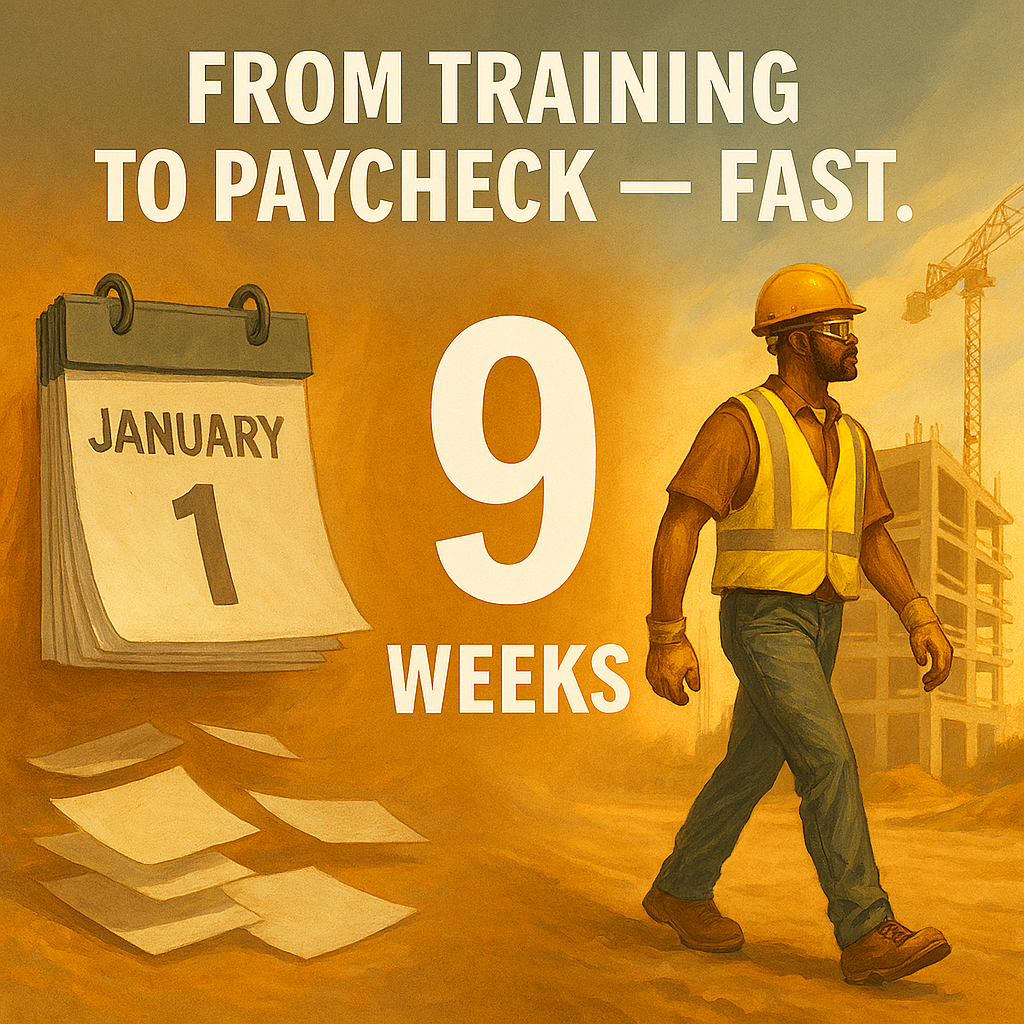
Accelerated carpentry programs in Phoenix are designed for people who can’t afford to wait a year for income.
In the modern economy, "speed to market" is everything. I frequently advise the unemployed and underemployed that they don't have a year to wait for a paycheck. Traditional institutions often require a 6-to-12-month commitment. In contrast, Phoenix’s accelerated models, like BuildStrong Academy, get you job-ready in approximately 9 weeks.
This isn't a shortcut; it's an intensive immersion. This short, accelerated training is designed to move you into the professional workforce within weeks of graduation. For someone needing to maximize their career ROI, this is the most efficient transition available in the Valley.
4. The 75% Rule: Swapping Desks for Shop Time
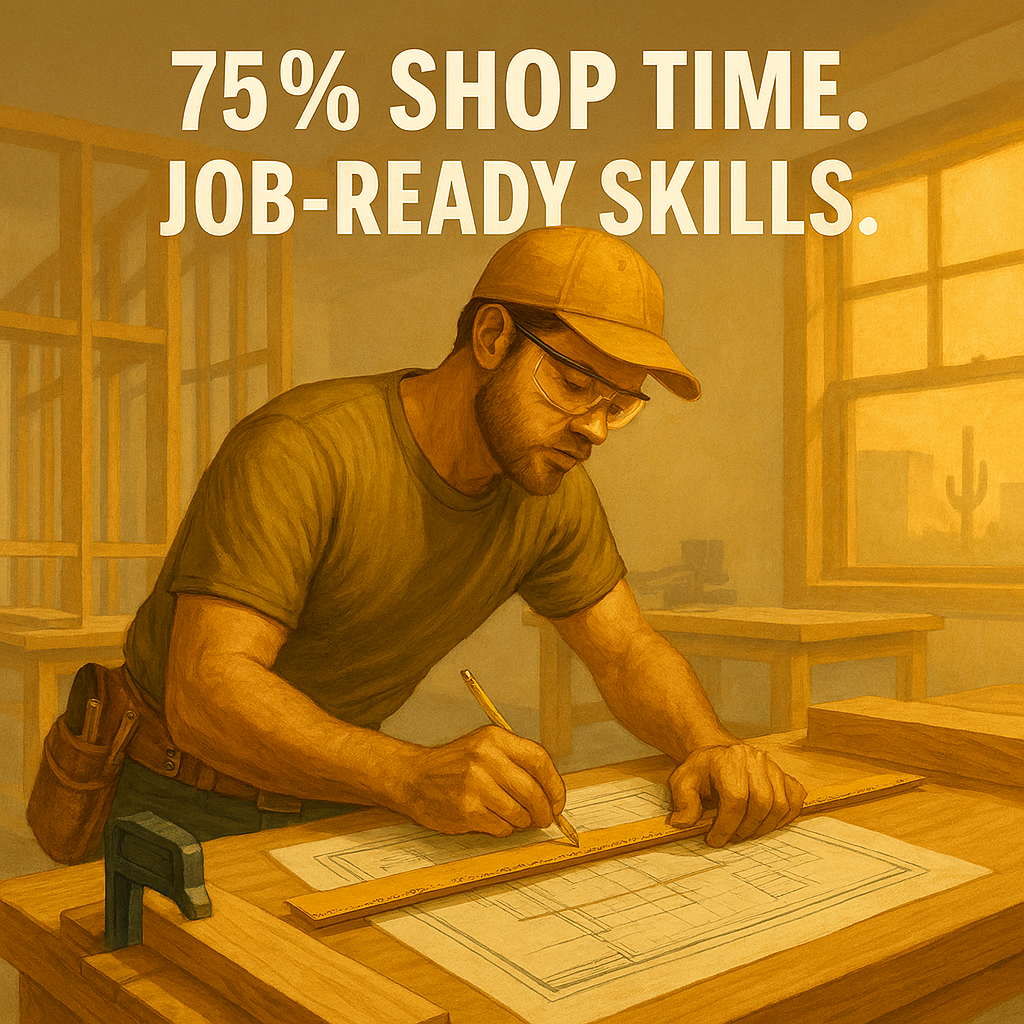
The reason these programs work so quickly is the "75% Rule." Modern trade education in Phoenix has abandoned the lecture-heavy model. Instead, students spend three-quarters of their time in the shop with real tools and materials.
Using the HBI PACT curriculum, these programs focus entirely on "job-site readiness." By the time you step onto a Phoenix construction site, you have already spent hundreds of hours simulating the exact environment you’ll be working in. This employer-driven style ensures you are productive and safe from the very first hour on the clock.
5. The "Golden Ticket" Credentials
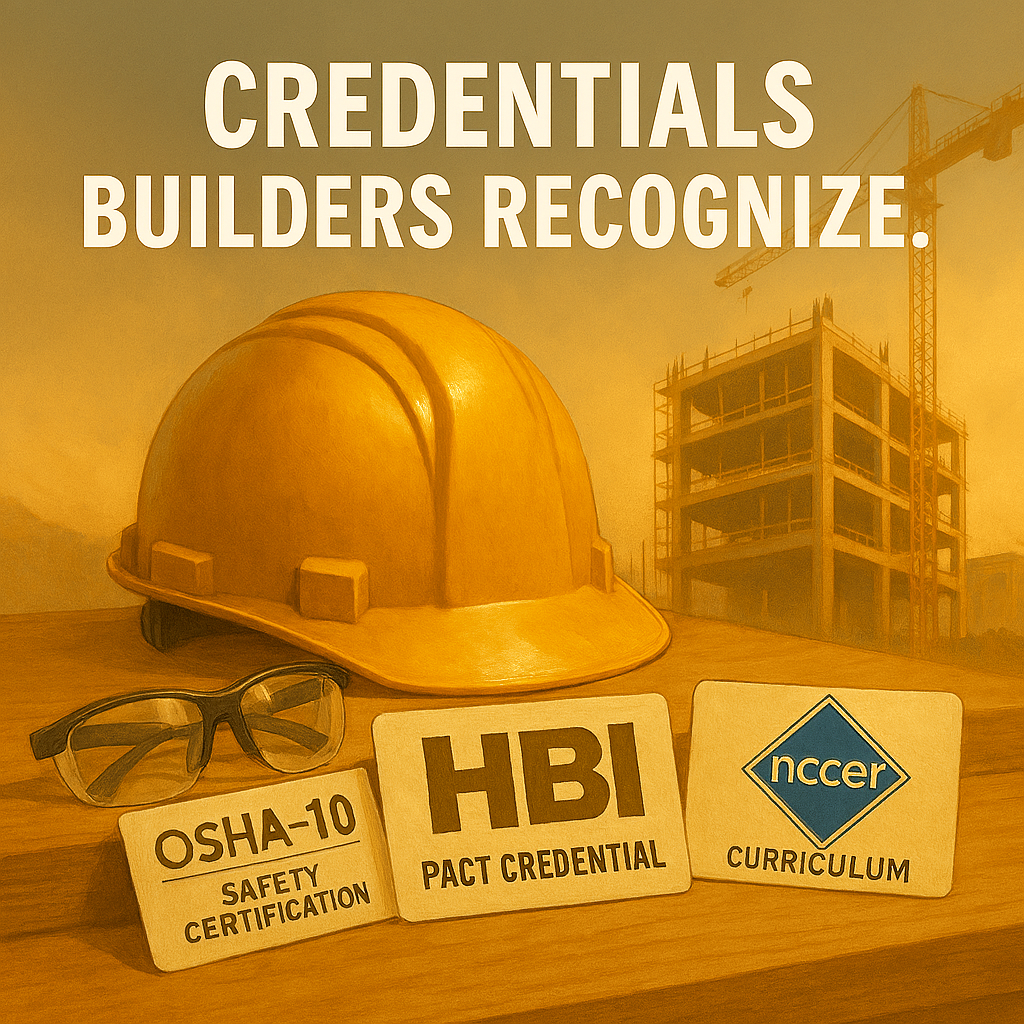
While your training is local, your value is national. Graduates of these Phoenix programs don't just leave with experience; they leave with "Golden Ticket" credentials that are respected by builders across North America. In the Valley, you should aim for these specific markers of authority:
HBI PACT Credential: A Pre-Apprenticeship Certificate Training recognized by the Department of Labor and major builders.
NCCER Curriculum: National Center for Construction Education and Research standards, specifically utilized by major commercial firms like Okland Construction.
OSHA-10 Safety Certification: The universal industry standard for job-site safety and hazard recognition.
6. Specialization: From Rough Framing to Fine Art
One mistake many make is thinking carpentry is a monolith. In reality, it offers diverse pathways with very different day-to-day realities. As a consultant, I help people choose between three primary tracks available in the Valley:
Residential Construction: The Home Building Academy specializes in residential framing, perfect for those who want to be part of Arizona’s massive housing expansion.
Commercial Carpentry: Firms like Okland Construction offer apprenticeships focusing on large-scale infrastructure and commercial projects, often utilizing the NCCER curriculum.
Precision & Fine Art: The Phoenix Woodworking School focuses on "finish" carpentry, such as high-end cabinetmaking and furniture.
Consultant’s Tip: "Don't confuse production with precision. Residential framing is about the strength and speed of the skeleton; finish carpentry is about the meticulous detail of the skin. Choose the path that matches your temperament."
7. Your Future in the Valley
The health of the carpentry trade in Arizona is robust and resilient. Between our residential growth and the push for green infrastructure and sustainable building, the demand for skilled craftsmen has never been higher. Carpentry offers more than a paycheck; it offers the tangible reward of building the future of the Valley with your own two hands.
As you look at the changing Phoenix skyline, ask yourself: Are you ready to stop being a spectator and start building a career you can actually see?